Why Gas Turbine Blades Endure Extreme Heat: Advanced Materials & Cooling Science

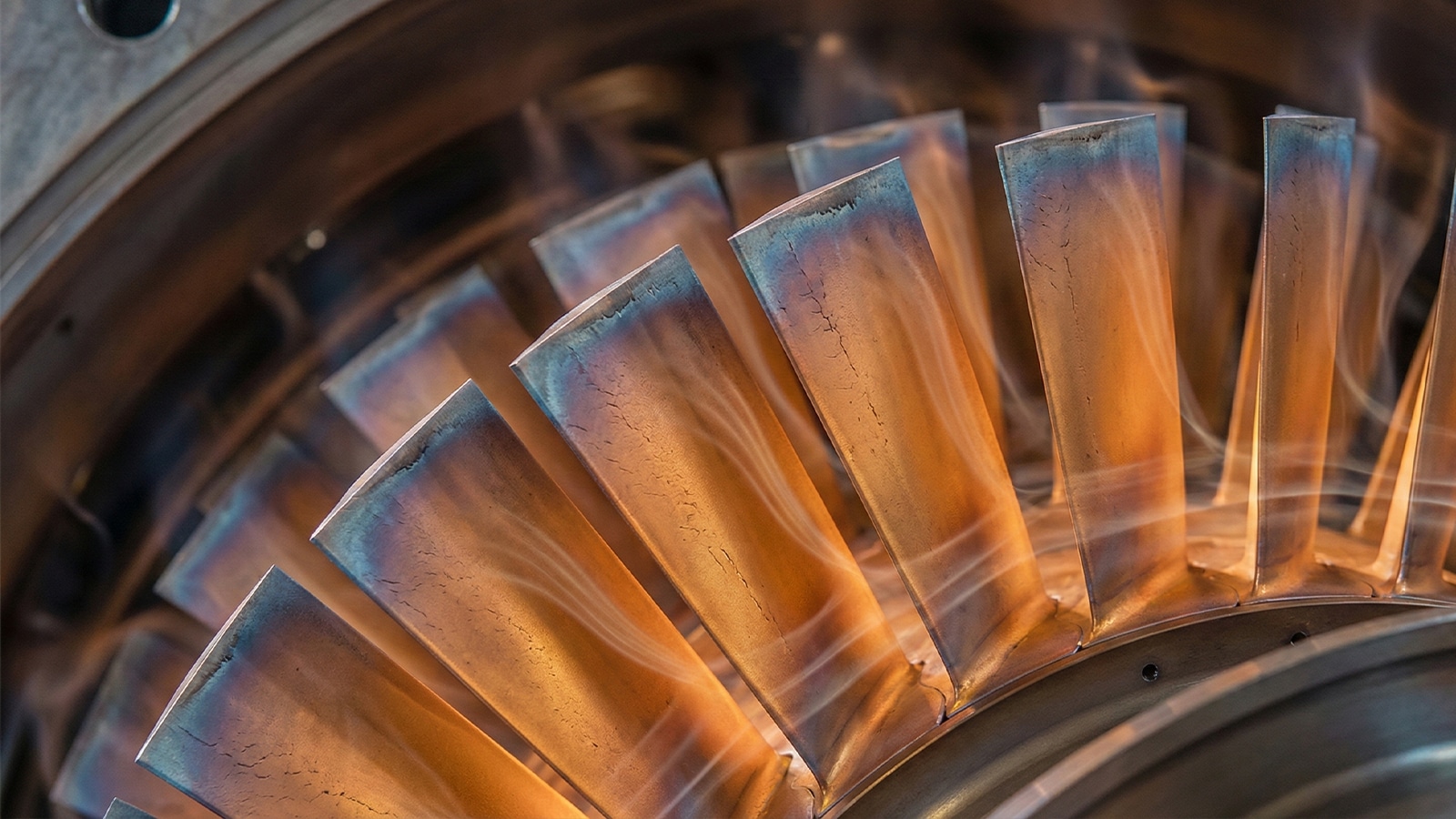
Gas turbines underpin contemporary power production and aviation, enduring extraordinarily severe conditions. Turbine sections confront temperatures surpassing 1,500°C—well beyond the melting thresholds of typical metals—yet blades preserve structural integrity, yielding dependable operation across thousands of hours.
This extraordinary resilience stems from sophisticated materials, exacting engineering, and pioneering cooling innovations.

Here’s a comprehensive analysis of their survival mechanisms.

  1. Core Materials in Turbine Blades
    Nickel-Based Superalloys
    Nickel superalloys dominate high-temperature turbine blades, delivering:

Unparalleled strength under thermal extremes

Exceptional creep resistance

Robust oxidation and corrosion immunity

Extended fatigue endurance amid thermal cycling

These alloys incorporate intricate formulations—chromium, cobalt, aluminum, rhenium—to amplify heat and stress resilience.

Cobalt-Based Superalloys
Cobalt alloys excel where thermal constancy prevails. Though less potent than nickel variants, they confer:

Superior hot corrosion defiance

Potent oxidation shielding

Resilience to thermal fatigue
Ideal for components confronting combustion byproducts and abrupt temperature swings.

  1. Cutting-Edge Engineering Materials
    Single-Crystal Superalloys
    A pivotal breakthrough, single-crystal blades eliminate grain boundaries—averting creep and fatigue vulnerabilities.
    Advantages encompass:

Elevated high-temperature potency

Immunity to intergranular corrosion

Augmented longevity

Tolerance for sustained thermal extremes
Prevalent in high-pressure stages of aero and industrial turbines.

Ceramic Matrix Composites (CMCs)
CMCs infiltrate the fiercest zones of future turbines, offering:

Minimal density (50–70% lighter than superalloys)

Endurance beyond 1,300°C

Superior thermal shock resistance

Diminished cooling demands, boosting efficiency
They herald advances in thermal performance and fuel economy.

Titanium Alloys (Compressor Blades)
Titanium alloys prevail in cooler compressor stages for their:

Exceptional strength-to-weight ratio

Fine oxidation resistance

Sturdy fatigue characteristics
Lightening engines while elevating performance.

  1. Anti-Melting Technologies
    Materials alone falter; integrated cooling and coatings safeguard blades.

Internal Cooling Passages
Blades feature labyrinthine internal conduits channeling compressor air to maintain metal below critical thresholds.

Film Cooling Orifices
Micro-perforations expel cool air, forming an insulating “film” that mitigates hot gas heat transfer.

Thermal Barrier Coatings (TBCs)
Ceramic overlays insulate surfaces:

Lowering metal heat by 100–200°C

Enhancing oxidation barriers

Mitigating thermal fatigue fissures
Yttria-stabilized zirconia (YSZ), plasma-sprayed, is standard.

Directional Solidification
Manufacturing aligns grains directionally, fortifying creep resistance.

  1. Precision Fabrication Techniques
    Blade production employs elite methods:

Vacuum investment casting

Electron-beam remelting

Laser-drilled cooling apertures

Automated TBC deposition

Additive manufacturing (3D printing) for novel geometries

These yield microscopic tolerances and intricate forms.

Related Projects